Product Description
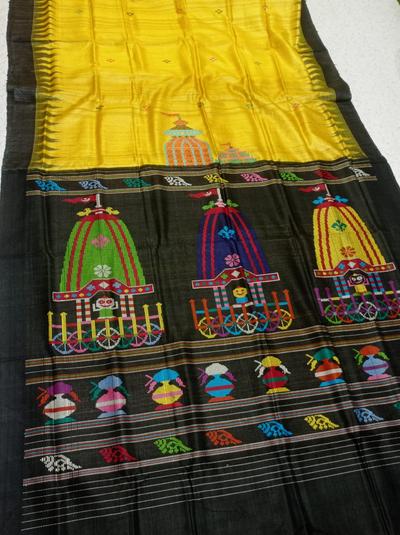
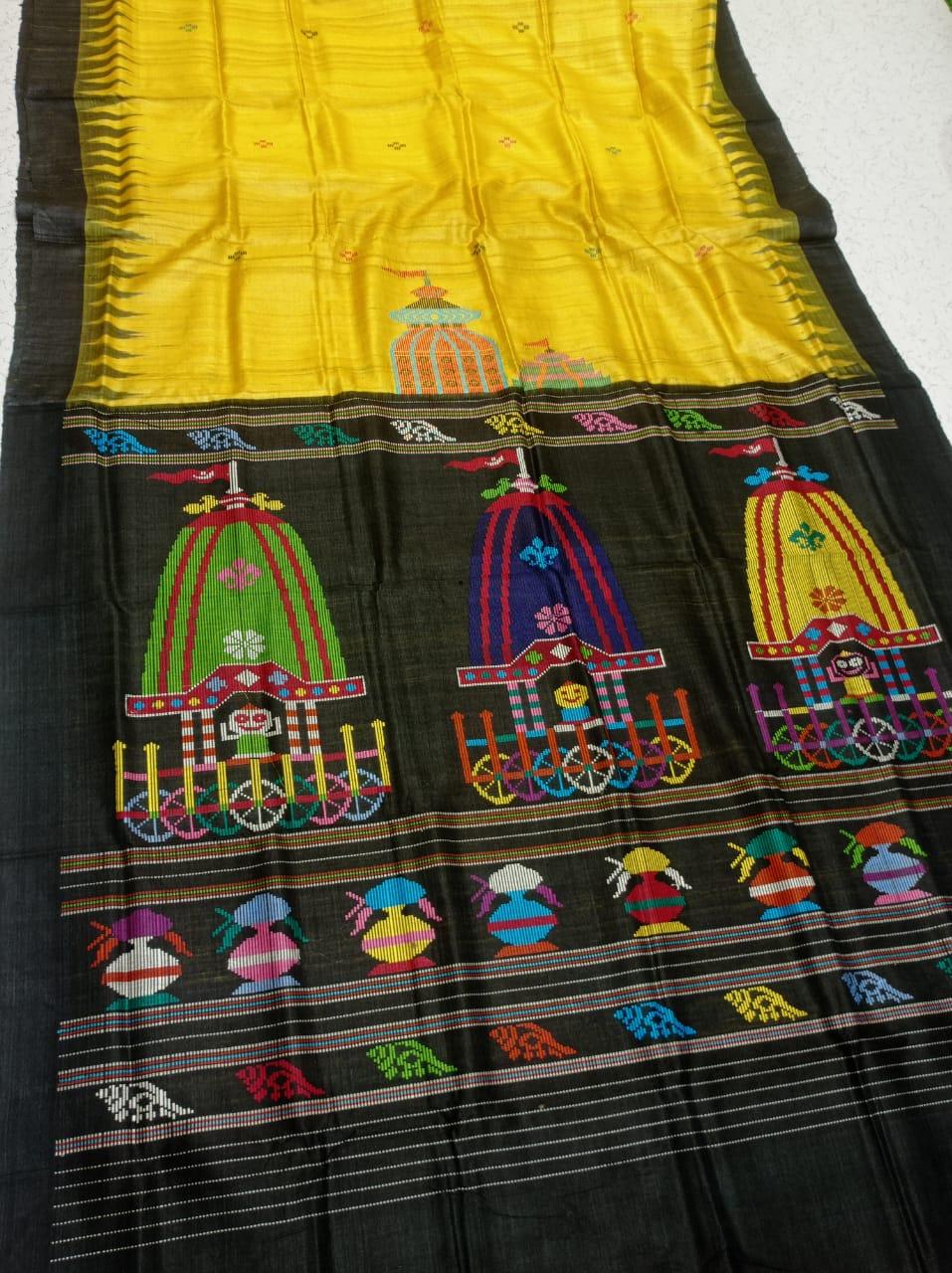
The Rathayatra saree is a special type of saree, often associated with the famous Rath Yatra festival, which celebrates Lord Jagannath's annual chariot procession. The saree is typically designed with vibrant colors, intricate patterns, and motifs that represent the cultural and spiritual significance of the festival.
Here’s a breakdown of Rathayatra saree product information:
1. Fabric
Material: Rathayatra sarees are made from a variety of fabrics, including silk, cotton, georgette, and chiffon. Silk sarees are particularly popular for this occasion due to their rich texture and vibrant colors.
Finish: The finish is often lustrous and shiny, especially in the case of silk sarees, giving it a festive look.
2. Design & Motifs
Lord Jagannath Motif: The saree may have motifs of Lord Jagannath, Balabhadra, and Subhadra (the three deities of the Rath Yatra).
Chariot Motif: Some designs include depictions of the famous chariot, which is an integral part of the Rath Yatra festival.
Floral and Geometric Patterns: Floral, paisley, or geometric patterns that mimic traditional art forms are also common. These designs are often woven or embroidered into the fabric.
Bright and Festive Colors: The saree features vibrant colors such as red, yellow, green, blue, and golden, which are symbolic of the joyous and sacred nature of the festival.
3. Pallu and Border
The pallu (end piece) is often heavily embellished with intricate Handmotifs weaving, and it may display an image of the Rath Yatra procession or deities.
The border is typically highlighted with decorative zari (gold or silver thread) work, which adds to the grandeur of the saree.
4. Occasion
Rathayatra sarees are primarily worn during the Rath Yatra festival, which is celebrated mostly in Puri, Odisha, though it is observed in many parts of India.
They are also suitable for religious gatherings, festivals, temple visits, or any occasion where traditional wear is preferred.
5. Care Instructions
Silk/Synthetic Fabric: For silk or synthetic versions, hand wash or dry clean is recommended.
Cotton: Cotton sarees can typically be machine washed with gentle detergent, but it’s always better to check the specific care label.
6. Price Range
Prices can vary depending on the fabric, design, and craftsmanship.
A basic cotton Rathayatra saree may cost anywhere from ₹1,000 to ₹3,000.
A high-end silk Rathayatra saree with intricate embroidery or zari work may range from ₹5,000 to ₹20,000 or even more.
7. Where to Buy
Local Handloom Shops in Odisha: You’ll find authentic Rathayatra sarees in Puri and other parts of Odisha, especially during the festival.
Online Marketplaces: Websites like Amazon, Flipkart, and specialized saree retailers (like Utsav Fashion, Saree.com, etc.) offer a wide range of Rathayatra sarees.
Traditional Boutiques: Many boutique shops specializing in Indian ethnic wear carry festive sarees, including Rathayatra-themed ones